

Liquid Cooled EV Charging Station vs Standard Charger: Key Differences
This guide compares a liquid cooled EV charging station vs standard charger across charging power, cable usability, equipment cost, maintenance requirements and ideal application scenarios. It is designed to help charging network operators, distributors and infrastructure investors choose the right technology for their projects.
Quick Answer
A liquid-cooled EV charger is generally better suited to high-throughput charging hubs that require very high charging power and lighter, easier-to-handle cables. A standard air-cooled charger is often more suitable for lower-utilization sites where lower equipment cost, simpler installation and easier maintenance are the main priorities.
If you are expanding your commercial EV infrastructure or looking to import chargers for your local market, you’ve probably heard a lot of buzz about ultra-fast charging. The biggest technological shift happening right now comes down to one core thing: how the charger cools itself down.
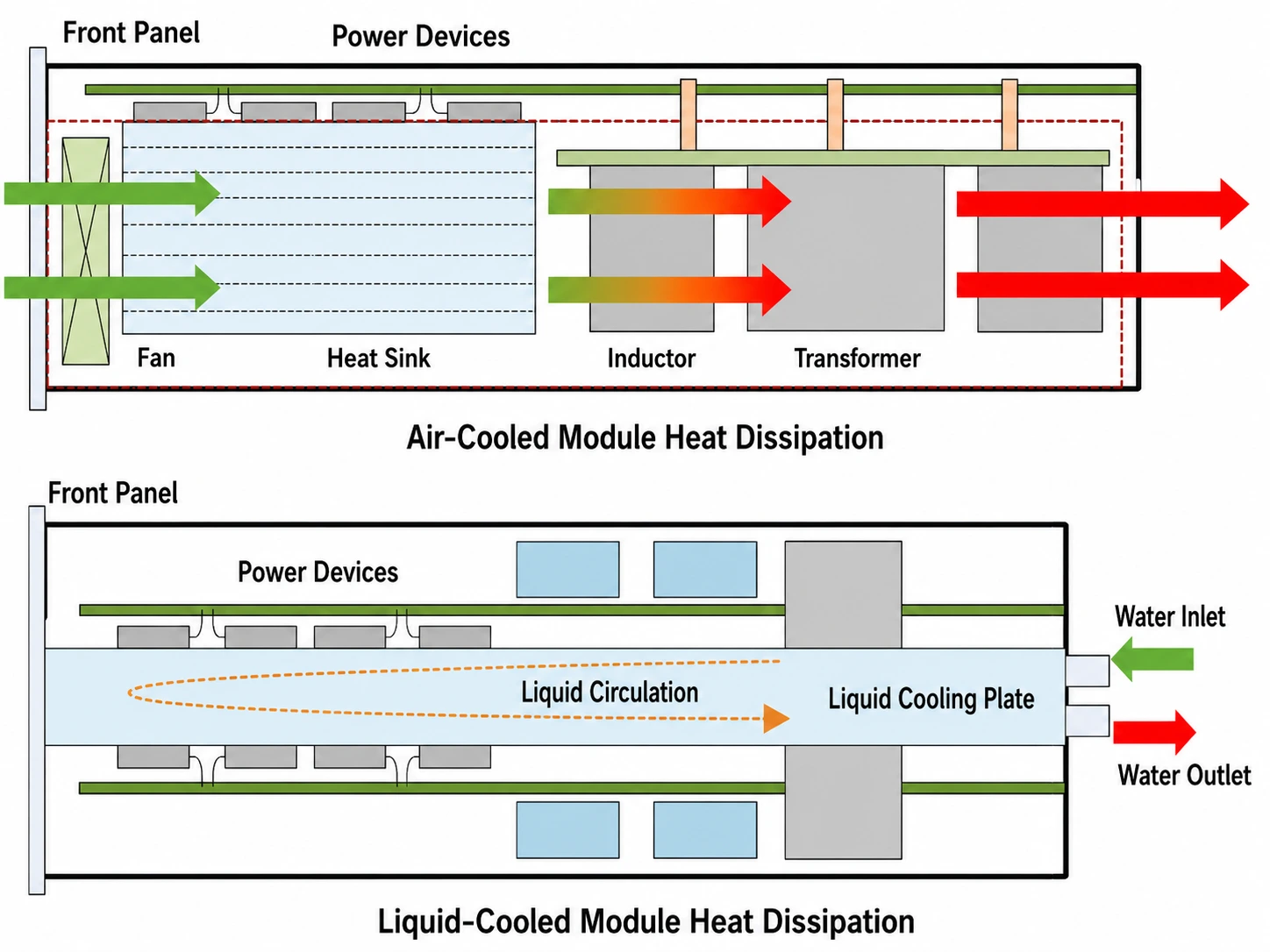
At the end of the day, the core difference between a liquid cooled EV charging station and a standard air-cooled charger is their cooling mechanism. But what does that mean for your business? In the real world, this difference changes three major things: charging speed, cable usability, and your upfront equipment cost. Let’s break it down in plain English.
Factory Insight: Don’t just buy the fastest charger on the market. As an infrastructure investor, you need to balance the user experience (speed and weight) with your long-term maintenance budget.
1. Charging Speed: Fast vs. Ultra-Fast
Let’s look at standard chargers first. Most standard fast chargers on the market rely on natural air cooling or built-in fans to push the heat out. Because air doesn’t move heat very efficiently, these chargers have a strict limit on how much power they can handle without overheating. Typically, a standard commercial fast charger runs between 40kW and 60kW, which takes about 30 minutes to an hour to fully charge a standard vehicle.
A liquid-cooled station, however, uses a continuous loop of cooling liquid to carry heat away from the internal components and cables. Because liquid cooling is incredibly efficient, these stations can handle massive amounts of power—often reaching 500kW or higher. In theory, a high-power liquid-cooled charger can add 200 kilometers of range in just 5 minutes. That cuts the waiting time down to about one-fourth of a standard charger.
2. Cable Weight and Usability
Here is a detail that many first-time buyers overlook: the actual weight of the charging cable.
To handle high electrical currents without melting, a standard air-cooled charger has to use very thick copper wires wrapped in heavy insulation layers. This makes the charging plug and the cable incredibly thick and heavy. If you’ve ever used one, you know that single-handed operation can be a real workout—especially in freezing winter weather when the heavy plastic cable stiffens up.
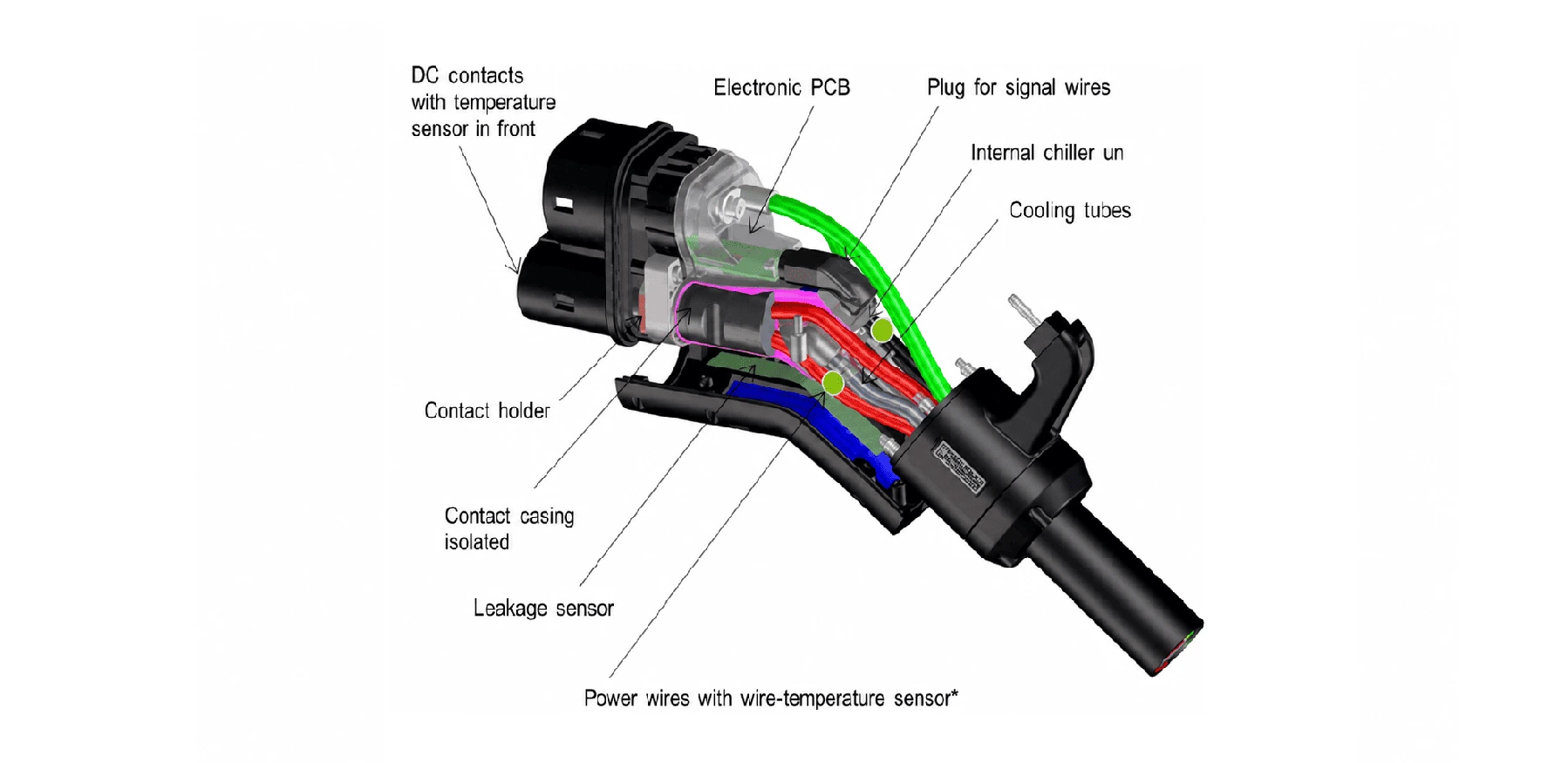
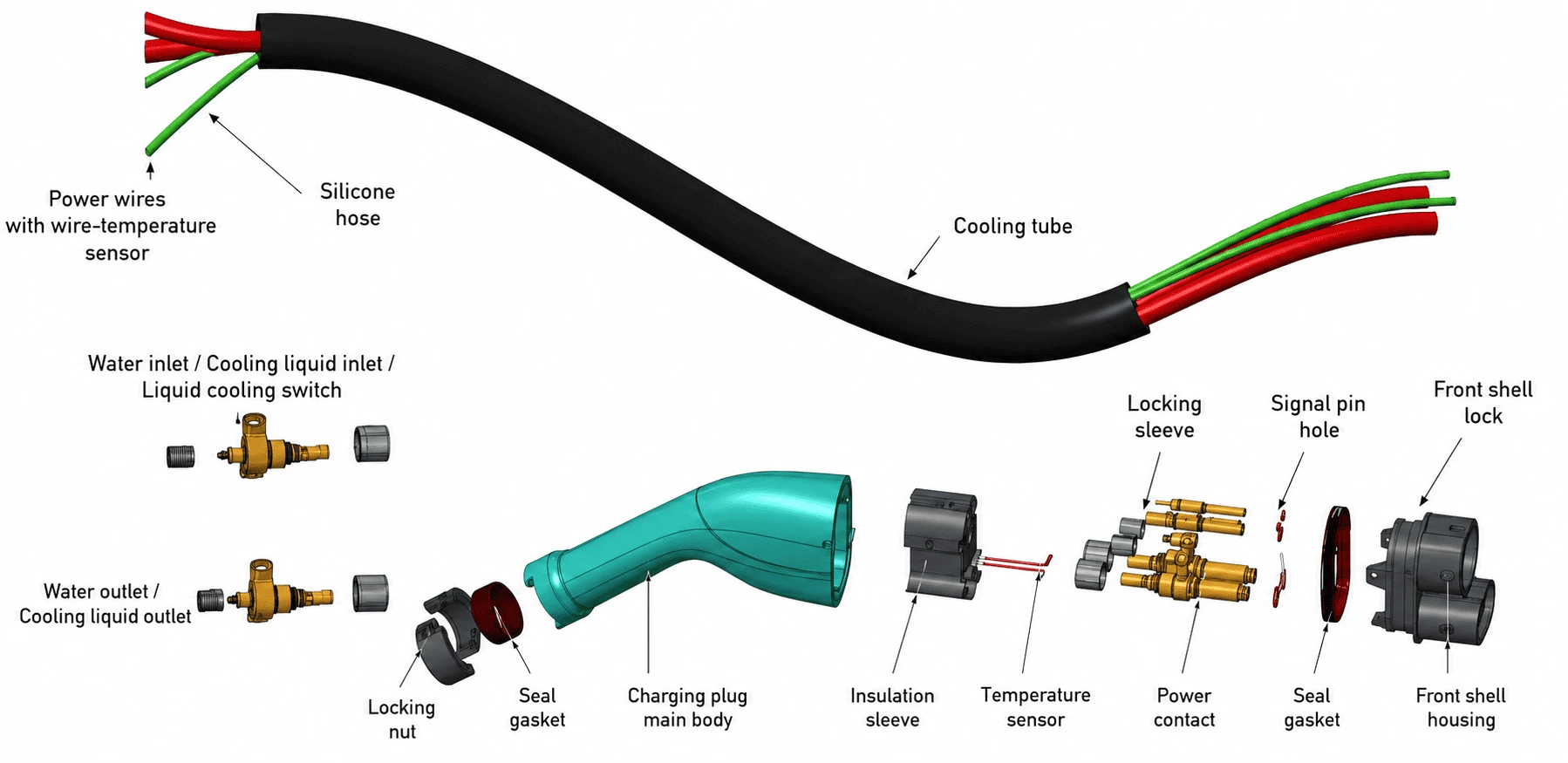
Liquid-cooled chargers solve this problem with smart engineering. The cable features a hollow internal structure where the coolant flows directly alongside the conductors, pulling heat away instantly. Because the liquid handles the heat, the copper wires can be made much thinner. The result? A cable that is remarkably thin and lightweight—flexible enough to handle easily with one hand, feeling more like a household vacuum cord than a heavy industrial cable.
3. Upfront Costs and Long-Term Maintenance
Here is the catch. Standard chargers use mature, straightforward technology without any complex cooling loops, making them highly reliable, cheap to buy, and simple to install. You can easily get a solid, dependable standard fast charger for a reasonable price.
On the flip side, a liquid-cooled station requires a lot of extra hardware: liquid pumps, radiators, specialized plumbing, and high-grade seals to prevent fluid leaks. This drives the equipment cost up significantly, with high-end ultra-fast stations often costing multiple times more than standard models.
Furthermore, you have to consider ongoing operations and maintenance (O&M). The cooling pumps and seals have a finite lifespan and require routine inspections. If a leak occurs, it risks causing an electrical short circuit or damaging the internal electronics.
The Bottom Line: How to Choose for Your Site?
| Factor | Liquid-Cooled Charger | Air-Cooled Charger |
|---|---|---|
| Charging Power | Suitable for higher-power charging configurations | Suitable for moderate-power applications |
| Cable Handling | Thinner and easier to handle at high current | Usually thicker at comparable current |
| Equipment Cost | Higher initial equipment cost | Lower initial equipment cost |
| Installation | More complex cooling and system requirements | Generally simpler installation |
| Maintenance | Cooling circuit, pump and seals require inspection | Simpler routine maintenance |
| Site Utilization | Better for high-throughput charging hubs | Better for low-to-medium utilization sites |
| Typical Sites | Highways, fleet hubs and busy public stations | Offices, retail parking and destination charging |
| Expansion Planning | Requires grid and thermal planning | Often easier to deploy incrementally |
To summarize the trade-offs:
- Liquid-Cooled Stations: Deliver ultra-fast speeds and lightweight, user-friendly cables, but come with a premium price tag and require active maintenance.
- Standard Stations: Are highly cost-effective, durable, and low-maintenance, but offer slower charging speeds and use much heavier cables.
Your choice should depend entirely on your specific business scenario. If you are building a charging hub along a major highway where truck drivers and travelers are in a rush, investing in a liquid-cooled ultra-fast system is the way to go. But if you are installing chargers for daily commuters at a retail parking lot, an office building, or a residential block where cars sit for hours anyway, standard chargers are more than enough—and they will save you a fortune on your initial investment.
Are you planning your next EV charging station project? [Contact our engineering team today] for a direct factory quote and a free layout consultation tailored to your local grid capacity.